That deal in your feed? It may be fake.
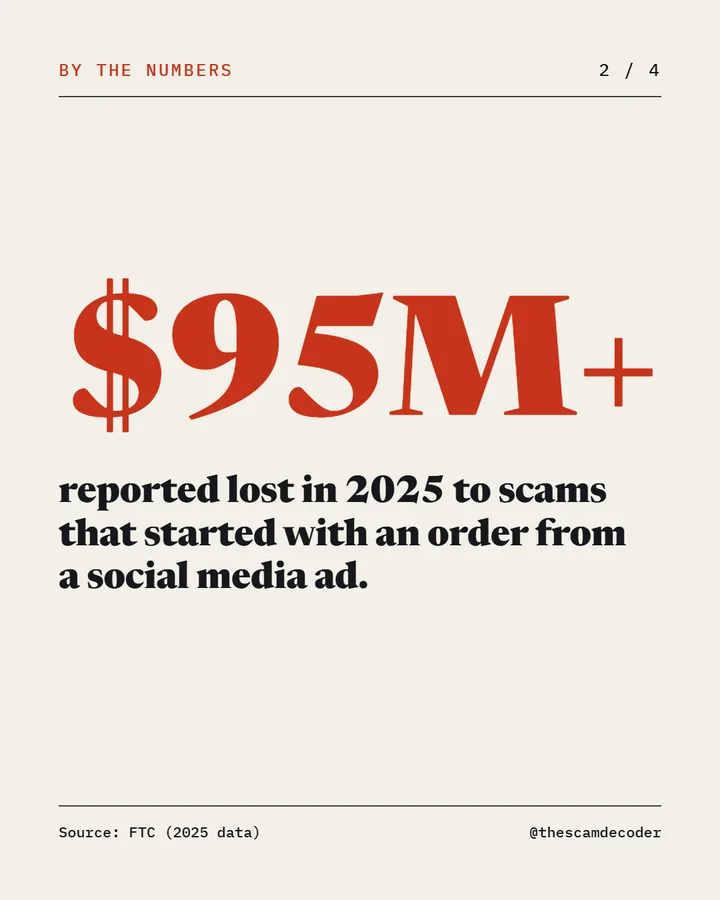
People reported losing more than $95 million in 2025 to scams that started with an order from a social media ad, per the FTC. The pattern: a polished ad, a convincing shop, a payment that’s hard to reverse and a package that never comes.
By the numbers
$95M+
Source: FTC
Decoded
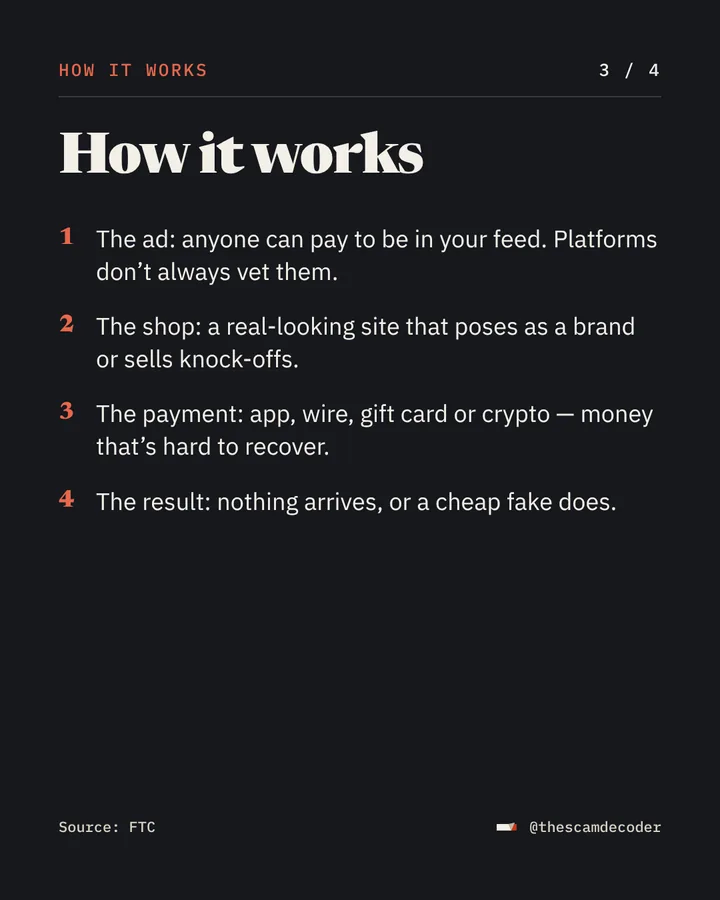
How it works
- The ad: anyone can pay to be in your feed. Platforms don’t always vet them.
- The shop: a real-looking site that poses as a brand or sells knock-offs.
- The payment: app, wire, gift card or crypto — money that’s hard to recover.
- The result: nothing arrives, or a cheap fake does.
Sources: FTC (social media ads), FTC (online shopping)
What to do
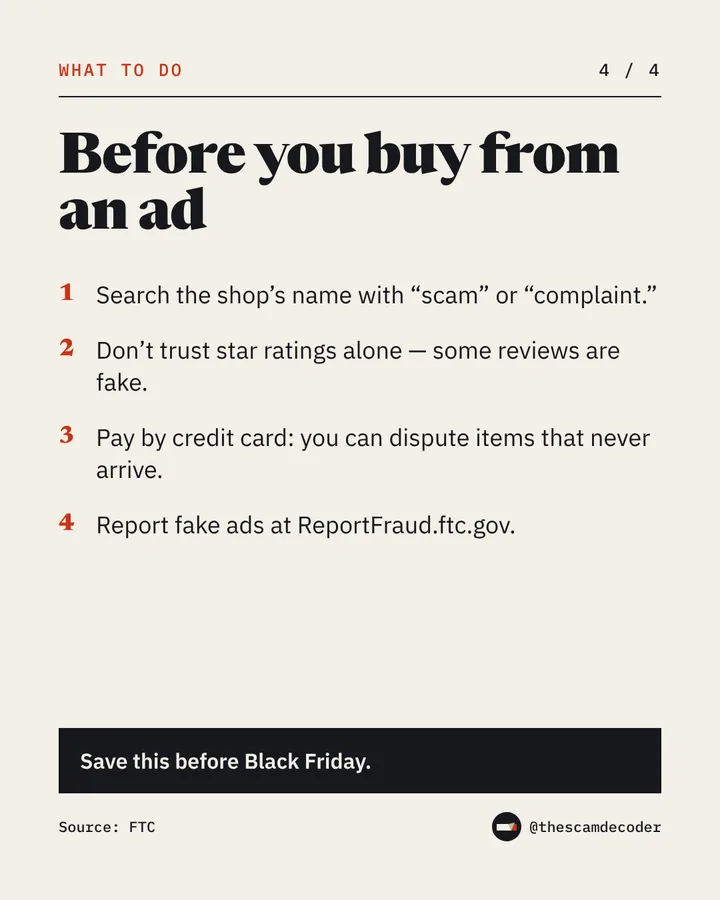
Before you buy from an ad
- Search the shop’s name with “scam” or “complaint.”
- Don’t trust star ratings alone — some reviews are fake.
- Pay by credit card: you can dispute items that never arrive.
- Report fake ads at ReportFraud.ftc.gov.
Sources: FTC (social media ads), FTC (online shopping)
Lost money or shared your details? See every official place to report a scam, in the US and the UK.
On Instagram
A new scam, decoded every weekday.
Plus a new video every Saturday.
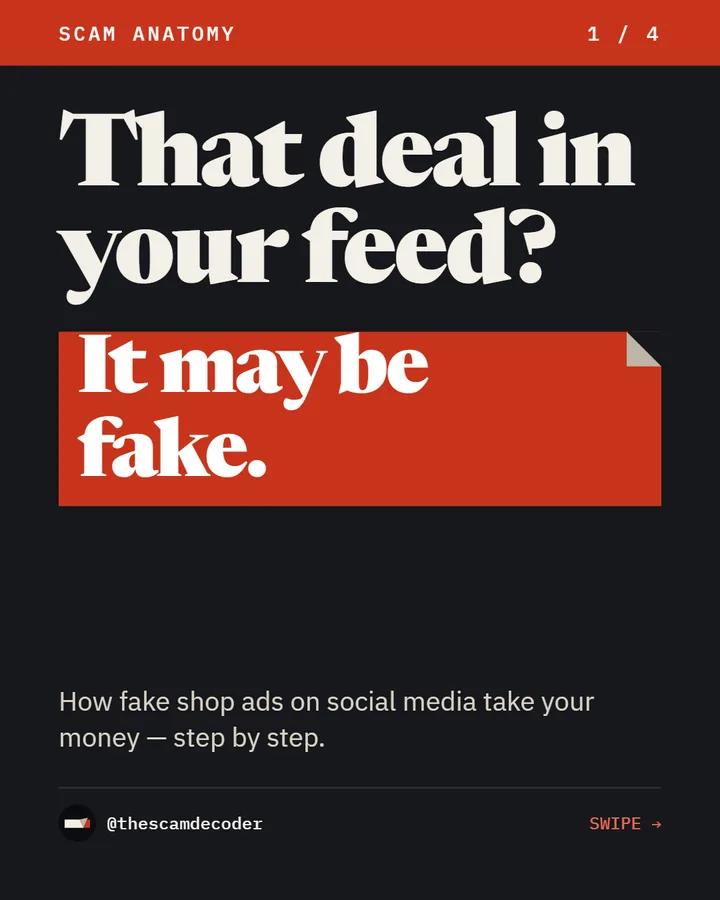
The post as it ran on Instagram on October 30, 2026.
Sources
- Federal Trade CommissionAre ads on social media vetted or checked for scams? Here’s what to knowAugust 10, 2026
- Federal Trade CommissionReported losses to scams on social media eight times higher than in 2020 (Data Spotlight)April 27, 2026
- Federal Trade CommissionOnline Shopping
Independent and educational. Not affiliated with any government agency or company.