“This is your bank’s fraud team.” It isn’t.
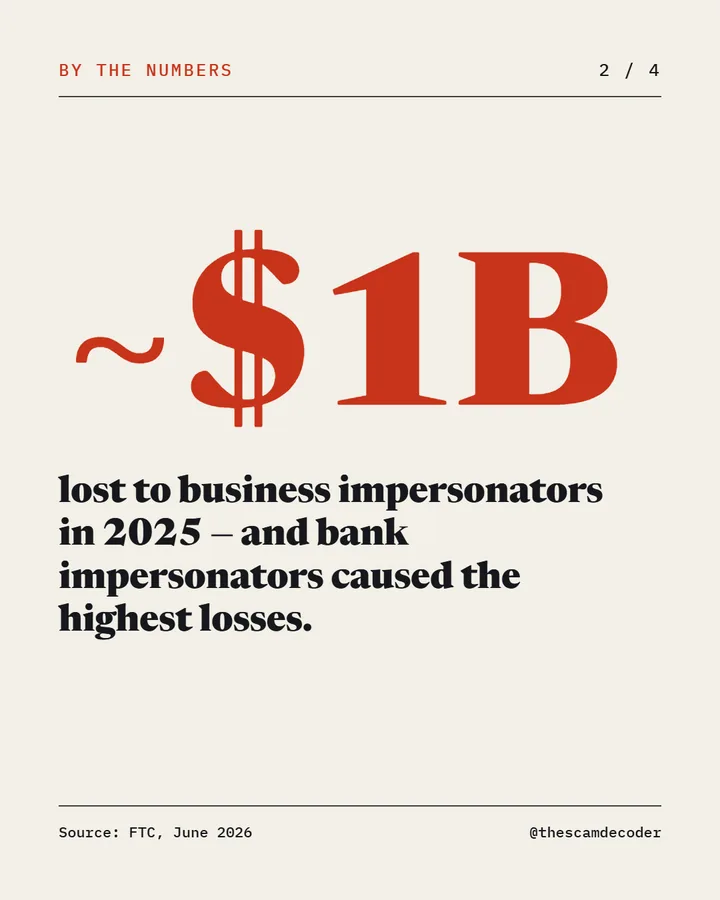
People reported losing nearly $1 billion to business impersonators in 2025, and bank impersonators caused the highest losses, per the FTC. The script always ends the same way: move your money to a “safe account.” It’s theirs.
By the numbers
~$1B
Source: FTC, June 2026
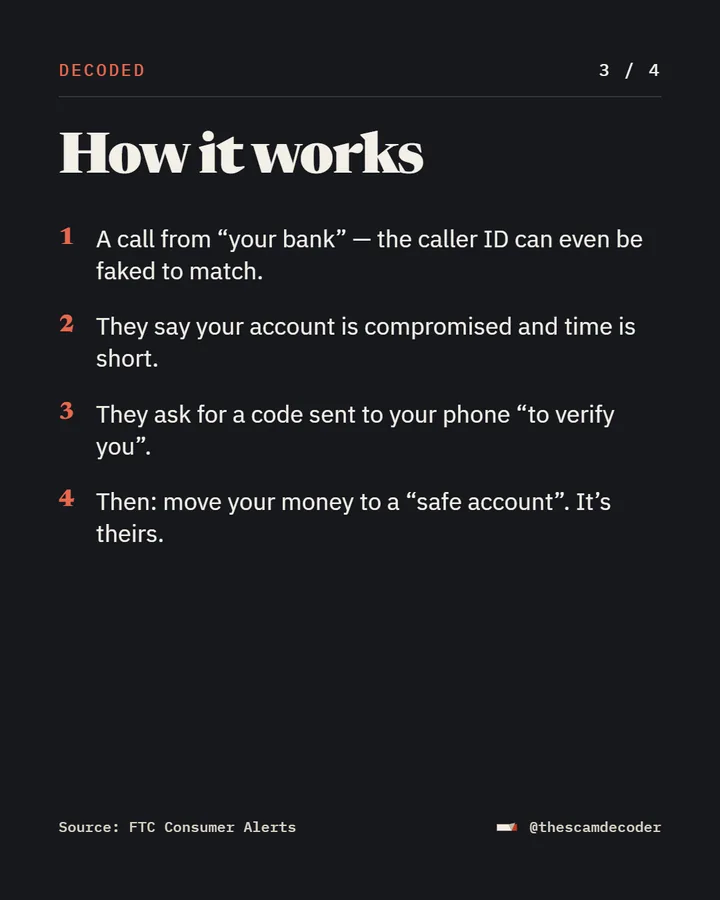
Decoded
How it works
- A call from “your bank” — the caller ID can even be faked to match.
- They say your account is compromised and time is short.
- They ask for a code sent to your phone “to verify you.”
- Then: move your money to a “safe account.” It’s theirs.
Source: FTC
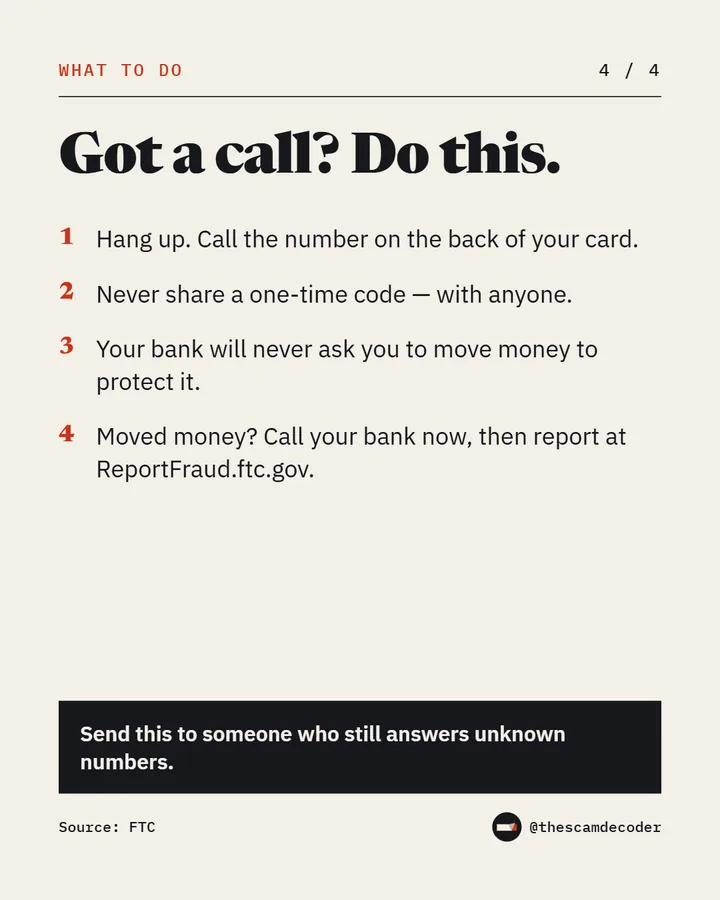
What to do
Got a call? Do this.
- Hang up. Call the number on the back of your card.
- Never share a one-time code — with anyone.
- Your bank will never ask you to move money to protect it.
- Moved money? Call your bank now, then report at ReportFraud.ftc.gov.
Source: FTC
Lost money or shared your details? See every official place to report a scam, in the US and the UK.
On Instagram
A new scam, decoded every weekday.
Plus a new video every Saturday.
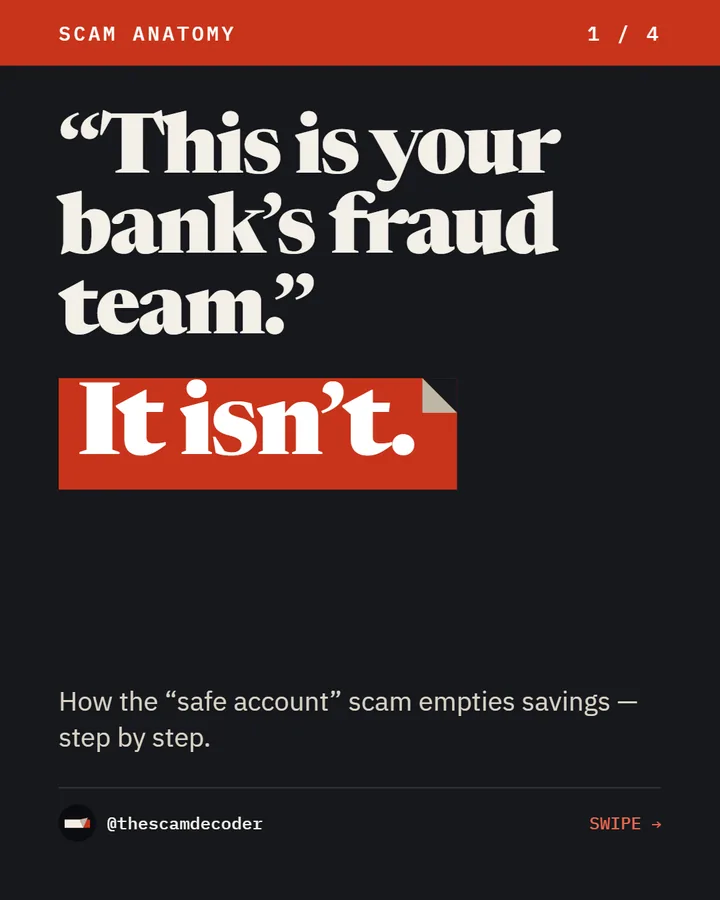
The post as it ran on Instagram on October 9, 2026.
Sources
- Federal Trade CommissionFTC Data Show People Reported Losing $3.5 Billion to Imposter Scams in 2025June 15, 2026
- Federal Trade CommissionGot a call about fraud activity on your bank account? It could be a scammerJuly 8, 2024
Independent and educational. Not affiliated with any government agency or company.